Mtf For Large Format Lenses
Does anyone know where to find the MTF curve for super symmar HM lens? I have seen the MTF curves for apo sironar w, just like to compare.
Fujifilm has released a pair of G-mount lenses for its GFX 50S medium format camera, an adapter for using legacy Fujifilm large format lenses and information about future GF lenses.The GF 23mm F4 R LM WR, equivalent to 18mm when mounted on the GFX 50S, has a linear focus motor, a nine-blade circular aperture, ED, super ED and aspherical elements, and a Nano GI coating. It's also weather-resistant and functions down to -10°C/+14°F. It'll ship in late June for $2599.Also coming in June is the GF 110mm F2 R LM WR, which also has a nine-blade aperture, weather-sealing, and a linear motor.
It has three ED and one super ED elements and is equivalent to 87mm when mounted on the GFX 50S. It will be priced at $2799.Fujifilm also released a roadmap for future medium format lenses. Coming later this year is a 45mm F2.8 R WR (equivalent to 36mm), followed by a telephoto prime and teleconverter.Lastly, the company will soon be offering the 'View Camera Adapter G,' which allows you to use the GFX 50S with 4x5 format view cameras. The adapter allows the GFX 50S to be used on a standard Graflok-style mount camera, enabling the use of large format Fujinon lenses, such as the CM series.Press Release. GFX MEDIUM FORMAT MIRRORLESS CAMERA SYSTEM ADDS TWO NEW GF LENSES FOR PORTRAITS TO PICTURESQUE SCENESFUJINON GF110mmF2 R LM WR and GF23mmF4 R LM WR Lenses expand the GFX user experience; updated GF lens roadmap announced and new GFX firmware coming soonValhalla, N.Y., April 19, 2017 – As the leader in innovation for photographers, FUJIFILM North America Corporation today announces two new GF lenses for the FUJIFILM GFX 50S medium format mirrorless digital camera system, the GF110mmF2 R LM WR (equivalent to 87mm in 35mm format) and the GF23mmF4 R LM WR (equivalent to 18mm in 35mm format). A new GF lens roadmap is released today, along with plans for a new FUJIFILM GFX 50S firmware update this spring.FUJINON Lenses Guarantee Image PerfectionAs part of the GFX system, Fujifilm is launching newly developed, ultra-high resolution FUJINON GF lenses.
Taking advantage of the mirrorless system’s structure, the G Mount has a short flange back distance of just 26.7mm that reduces the back focus distance as much as possible. This prevents vignetting and achieves edge-to-edge sharpness. All FUJINON GF lenses have been designed to support sensors of over 100MP.New Lenses Deliver Image ExcellenceThe FUJINON GF110mmF2 R LM WR is a medium telephoto lens perfect for portraits. With a focal length equivalent to 87mm in the 35mm format, it achieves a brightness of F2.0 when used wide open to deliver stunning bokeh.The FUJINON GF23mmF4 R LM WR has a focal length equivalent to 18mm in the 35mm format and is expertly suited for landscape and architectural photography. Despite the super-wide angle of view, distortion is kept to a minimum, and with the high-resolution performance extending all the way to the edges, sharp depiction as if looking at an actual landscape is achieved.Both new lenses feature fast and quiet autofocus (AF) by using a linear motor, are dust and weather resistant, and are capable of operating in environments as cold as 14°F / -10°C.
Yseems lro present evidence to be excellently qualified for the task, but maybe it will be shared with others. Un Dia De Noviembre Last played on.
What impresses me is the roadmap. You have to applaud Fuji for it again.1.) It is very clever to bring a roadmap at the start of a new camera system. So buyers see that you are commited and the know when to expect a lens they are waiting for and can plan (or save money) their switch or system building.2.) Remembering the first release of the Fuji X APSC start. Fuji brought a 50mm, 28mm and 90mm (equiv) at launch. They start again with 50mm and 90mm. But this time they bring a 35mm, 85mm and 18mm shortly after the launch.
So most of the importent focal length are already there 2017. When I compare this to the competition. Samsung had no 85mm equiv.
Til the end and even Canons and Nikons launches of mirrorless systems look very unprofessional compared to Fujis X launches. Has anyone looked at the GFX 23mm sample images yet? I've download some full res files on Fuji site and some from a blogger. Not exactly inspiring for critical landscape work. They look noisy and soft. Can someone find some that were not shot handheld at high ISO?Up against a 5DSR with, let's say, the 16-35 F2.8 III the GFX & 23mm will be slower, heavier, less flexible and more expensive so I was expecting it to knock my socks off with superior detail and noise free image quality.
Unfortunately the only advantage I've seen is a more pleasant lack of distortion.I really want to love the GFX system for landscape work. It seems so promising.
Hopefully someone will post some full res files soon that really make it shine with the new 23. As if shallow DOF is the only reason for buying this camera.' - I'd never say something that stupid.
Stop trying to read between the lines, before you get paranoid or something.It's all connected - FL, aperture, sensor size, lens size, quality, noise. While DoF is only a side effect and an attribute or a characteristic of the amount of light used to create an image. Quality information amount of light DoF.What type of photographer am I? The one who uses photography as a tool and a piece of technology, NOT a woo-woo superstition, touchy-feely, hipster, art fetish and freaking magic. What type of photographer are you?@IdM photographyWhere have you been all these years of Fuji propaganda?:) You should at least read some interviews, to make things clear.
Welcome back:)FF market is not crowded. Specially the reasonably priced part of it. There's literally 5 cameras since 2012. The mediumformat was never able to come up with lenses that had the shallow depth of field from fullframe-bodies. Don't get me wrong, there is no need to have that shallow DOF anyway in most cases. The fact allone that most professional MF cams had central shutter lenses kept them @f2.8.Medium format has it's advantages in lightgathering, Tonal Range and Dynamic Range.
This was somehow lost with keeping the old CCDsensors for years, while the fullframebodies went up to fairly good CMOS sensors. Today, with using the same technology it's again better in dynamic Range but it won't beat the DOF of an f0.95 Leica lens anytime soon;)Probably NEVER.
I also have a Zenza Bronica ETRSi and a Fuji GX680 and shoot wide open @f2.8 but that's never getting close to a f1.2 lens. And nowadays the Sigma f1.4 are sharp wide open, so there is no difference to fullframe in DOF anymore. It's even less difference because there is no real sensor available matching the old 6x7 or 6x8 formats;) We compare real MF from filmdays to this Fuji-MF-Crop-sensor which is closer to 135 format than to 6x7. I don't need DOF-records, just saying that fullframe stays the sweatspot. The Mamiya 80mm f1.9 lens was nice back then. No leafshutter but hey.
This adage about a fast lens being better at a common stopped-down f-stop than a slower lens is more about correlation not causation. You could argue that to get decent quality wide-open, a faster lens has to be better optically at all f-stops than a slower lens. But once you have a two stop (or more) difference, the biggest contribution to the IQ wide-open comes from glass that is not 'used' (sees no direct light) at smaller apertures. Correcting the aberrations from those outer areas of the lens elements (those largely determining IQ wide-open) doesn't necessarily correct for aberrations caused by the inner areas of the lens elements (that determine IQ stopped down). There is some causal connection, eg, via the use of special, low dispersion glass, but a faster lens largely tends to be better stopped down than a slower lens at the same f-stop wide-open because it was designed to better. @vscd While I agree with Josh that most people tend to stop down at least a tick or two, the benefit of having a really fast lens on a MF camera can be of benefit when one doesn't assume the subject is only, say, 10ft.
Away from the camera. What's the DOF at 30ft. When photographing a kid on a wooden dock (dock running left-to-right), requiring only the front of the dock and kid to be in focus? Stop down to f/2. Now what?roughly 5ft.?So at 6:30am, with the lens gaping wide open, the AF receives a benefit irrespective of what the lens is stopped down to.
So does having a brighter viewfinder; being able to see the subject better especially when manually focusing. I think that's far from 'useless' in many situations as there's a lot of practical gain to be had from a fast MF lens.:)However, no matter how aesthetically useful and utilitarian fast apertures can be, the bottom line is that typically MF photographers don't long for such. @jnd The point is that 3 years ago, you couldn't shoot a 50mp FF camera at low or high iso and get the same result that you could from a Hasselblad 50c. Today, you can't either (fact), especially if you don't fancy mirrorless.


FF comes close in many respects and makes more sense than MF in some areas that routinely used MF in years past (fashion catalog work).There are other nuances to be considered as well, which go beyond equivalency and image quality; nuances that directly affect how long one spends in post, which is directly tied to how much money one loses spending time in post. The flat raw colours of the 645z allow more freedom as opposed to contending with saturation baked into a lot of other raw files (e.g.
The kind of real world benefits one doesn't realize comparing MF to FF apertures, etc. Stuff that has to do with actually making money (as opposed to physics), saving time, increasing utility per.other. photographer's needs. Not those of your own. It's just people on dpreview who think that way, if the price is your number one concern in photo equipment, then MF is clearly not for you (not Fuji, not Pentax, clearly not other brands).And there is no such thing as 'perfect equivalent'. Even using two similar specked lenses on a same body, you'll get different rendering, different contrast, different focus plane, and so on. An used canon 135/2 on a 5D mk2 can still produce breathtaking images, and will give you extreme high value for the dollar, but that is clearly not the target audience for these new systems.
Most of the audience for this 'affordable medium format' will actually care if they should spend money on something which they can get from another system already for much less. I mean, this isn't Leica S which you buy for the status and good feelings, right?I'm all for the shoot out, compare high resolution cameras (like 5DSR) with lenses producing similar photos (Canon L, Sigma Art, Zeiss Otus) and see if there's enough difference to use the Fuji. I'm just sceptical that Fuji with marginally larger sensor and new lenses somehow invented magical rendering and superior bokeh. ^^If all you have to go on is charts rather than actual usage then you are ill informed.I haven't tried MF so I don't have any clue but I can talk about APS-C vs FF.The differences between APS-C and FF aren't very high. However I like the 'look' of FF which is something hard to describe. Similarly the differences between APS-C and m43 are again very little but after seeing tons of my friends m43 photos and compared to my APS-C images I find APS-C just that little better.MF is similarly bigger and to those who have the budget to afford such a system its a no brainier what they will look for.The only friend I have who used MF finds them superior to FF for his work purposes and hence uses them.
However for fun photography he uses his D810 since thats simply easier to shoot with. Premium APS-C bodies mated to premium lenses provide images that most photographers couldn't discern from FF in many situations; so? What does that have to do with the utility of shooting FF? Nothing is what. Same for MF.You don't get the same utility shooting a Canon 5dsr as you do shooting MF. The raws do not process or look the same. The raw colour isn't the same (flat allows more photographer options).
You don't get that information from test charts and debating equivalency and a Zeiss Otus mated to a 5Dsr doesn't change those facts. ^^ Again if all you have to go on is charts and what you see online then you will never get it. People don't click brick walls and charts.
You shoot things and process them, see the latitude of working with files, see the colours you get etc etc.Reading reviews is not going to help you. I never cared for FF till I actually tried it and now I can't go back to APS-C.Similarly in future if MF becomes affordable and I start earning much more from photography I will probably shift if I find the IQ differences enough for me. Currently the lenses for MF aren't fast enough. Depends what you do. I would argue that the MF lenses are fast enough, but that is another topic.To support this point, some photographer got a 645Z for a review, and while testing it he decided to do some assignment with it. When he delivered the final files to one of his usual clients, the client asked him what did he change, because the files have a 'superior clarity' and he likes it.
I think he was using some D8xx camera before.Anyway, that guy invested and stick to the 645Z for commercial photography from that point on. So no, it's not about corner scenarios where FF is better than MF, or 1' better than FF. It's the final images that talk, and many of the guys who move to MF do not do it only for the desire to spend some additional 20 thousands or such. @Jnd, my advice is to either shoot MF and compare it to FF yourself under a varied conditions (e.g. Shoot indoors at the camera store, then shoot just outside of the camera store where you capture sky, foliage, etc., then compare the raw files as-you're-processing-them as well).Or.you can ask someone who owns and shoots both the 5Dsr and also the 33x44 Sony sensor whether it be in a Hasselblad, Pentax, Phase, or Fuji.Accurate colours?
Phase, Leaf, Hasselblad, etc., all have slightly different colour personality irrespective of software used. Lenses also have their own colour personalities. A Zeiss 100 f/2 doesn't give the same colours as a Canon 85 f/1.2 on the same camera.Shooting charts is for gearheads. What about having to consider print/border sizes, frame sizes, crop-to-taste requests, heavy post work, enlarging parts of a file to make an 11x17'ish, etc.from files shot at 100 iso to 12,800 iso.See any real-world tests like that online? You can compare this with 24 mm 'FF' shift lenses which have a larger image circle than needed to cover FF.
And even then, the Fuji lens ($2600) is more expensive (Canon $1900, Nikon $2200, Samyang $700) and that while it is slightly slower (f/4 vs f/3.5) and its image circle is actually smaller than that of FF shift lenses. Almost all 24 mm FF shift lenses have an image circle of 60+ mm.
The GFX lenses only need a 55 mm image circle in comparison to cover 44 x 33 mm. Moreover, GFX lenses don't have to clear a mirrorbox and thus can use a less complex and less retrofocus design and they don't need to have the mechanics to allow for shift and tilt. You cannot divorce these two things: The lens is expensive for what it does on a technical level and it is expensive because it sells in much lower quantities than FF lenses.As an aside, the current 50 MP MF sensor has a pixel size of 5.3 μm. The highest resolution current FF sensor have pixel sizes between 4.1 and 4.9 μm (5Ds, D8x0).
A 100 MP 33x44 mm sensor would have a pixel size of 3.75 μm. On FF, the same pixel size would result in 62 MP. In general, that would put resolution requirements for FF shift lenses on a similar level as that for MF lenses.As to which degree the current lenses fulfil those requirements is another question and one could argue that lens resolution requirements should be compared using the pixel sizes available at the time of release of a given lens. ToselliI bet your Zeiss is also lighter and smaller. It's ok to have f/4 lens but I would expect it to be more compact when there is MF mirrorless now. For example I have Mamiya 7 film camera, it covers 6x7 frame (actually 56x70mm) and the lenses for it are F/4 or F/4.5 but they weight 300 to 500 grams and are quite compact for it's coverage (which is almost three times the area than this Fuji).
While being regarded as one of the sharpest medium format lenses ever. The 43mm (21mm FF equivalent) has basically zero distortion, you can use them wide open just fine. Now if I could use them on digital body I wouldn't need anything else.
@Arkienkeli: I understand your point, but what's the point in taking an exceptional 135 lens and adapt it to be a mediocre medium format one? Remember that the drop in resolution and vignetting is exponential as you move towards the edges of the coverage. Look for yourself how it behaves on a normal full frame, and try to imagine how it will perform on a sensor bigger than designedlooking at that pictures I doubt it would even cover this cropped MF, and if it would it will look terrible. On the other hand if I am wrong and everything is fine sigma will release their A lenses also in fuji GF mount! Equivalence may not matter but the image circle matters big time. And with taking the Image circle into account the equivalence is there again. Equivalence is a very important factor here.
To understand that take a magnifying glass in the sun and you will see that the Light will get more if you make a smaller circle with the light. And the light is getting less if you make a larger circle. But the light from the Sun stays the same.With your kind of thinking you should attach a 28mm f1.8 lens from the iphone to your fullframe sensor, this would be a tremendous wideangle lightgatering-lens.NOT. Except the fact that it's not a slightly larger coverage, but noticeably more. Also a 18 mm field of view is a lot different from a 24 mm one, sigma as an example makes a 24/1.4, and as best a 20 1.4, not a 18. If you consider that the fuji has a bigger coverage, so more resolution and tighter tolerances, and will probably sell about 1% of the sigma (it means a lot in economies of scale), add the law of diminishing returns and all is done. Otherwise you could use a cellphone module camera, that can give you 10-20% of the quality of a digital MF, with only 0.1-0.5% of its cost.
@nicolaiecostel yes, the Pentax 645 28-45 f/4.5 is retails around $5,000, and offers a cheaper alternative to buying Hasselblad lenses to cover the same range. It is an excellent lens that's also stabilized and has wonderful lens coatings and is nicely weather sealed.I'd rather it over paying Hasselblad $2.7k (45mm), $4k (30mm), $5.2k (35mm) and $6.2k (28mm).
Total of $18,000. (1) I like the idea of being able to take most of my Pentax lenses and put them on a medium format film camera and go! (2) I like the idea of being able to use most of my lenses in conjunction with a notably larger size sensor.I don't find the 645Z viewfinder to be an issue, though the info bar at the bottom when looking through the viewfinder can disappear if my eye isn't ideally seated in the eyecup.
Not an issue for me. Pentax might croak, but the 645z allowed me to do what I couldn't with my FF bodies.:). ^^ Its not really competing but another choice to use.The difference between APS-C and FF isn't terribly large. But having used FF I don't like the small loss in IQ when shooting APS-C.
For someone like me who appreciates the advantages of a larger sensor its difficult to accept something less capable.So if I was very rich and could afford to spend $15k on a system to upgrade from FF I might have considered the Fuji for its slightly better IQ.However my requirements need fast AF and none of the MF cameras offer that at this point so its not for me. More pressing is the cost of buying into the system but that should come down over time.
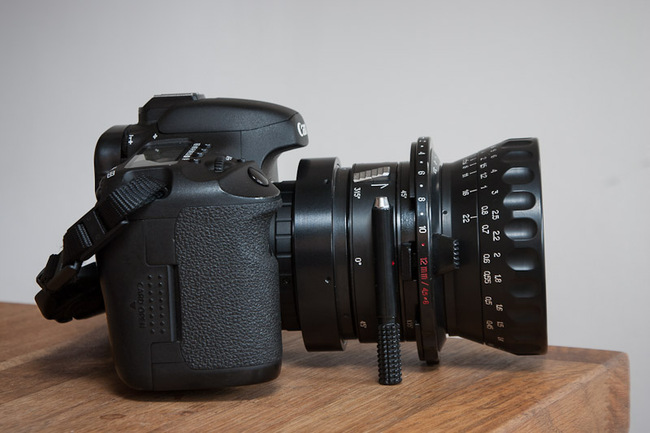
Large format lenses are that provide an large enough to cover large. Large format lenses are typically used in cameras and.Photographic optics generally project a circular image behind the. On smaller format cameras the image circle generally covers only the intended film size with little room to spare. Large format lenses are an exception. For large format use the circular patch of image light usually extends beyond the minimum size circle needed to fully cover the rectangle of the film. The extra image offers room to spare to make use of camera movements that re-align the lens away from dead center on the film.